

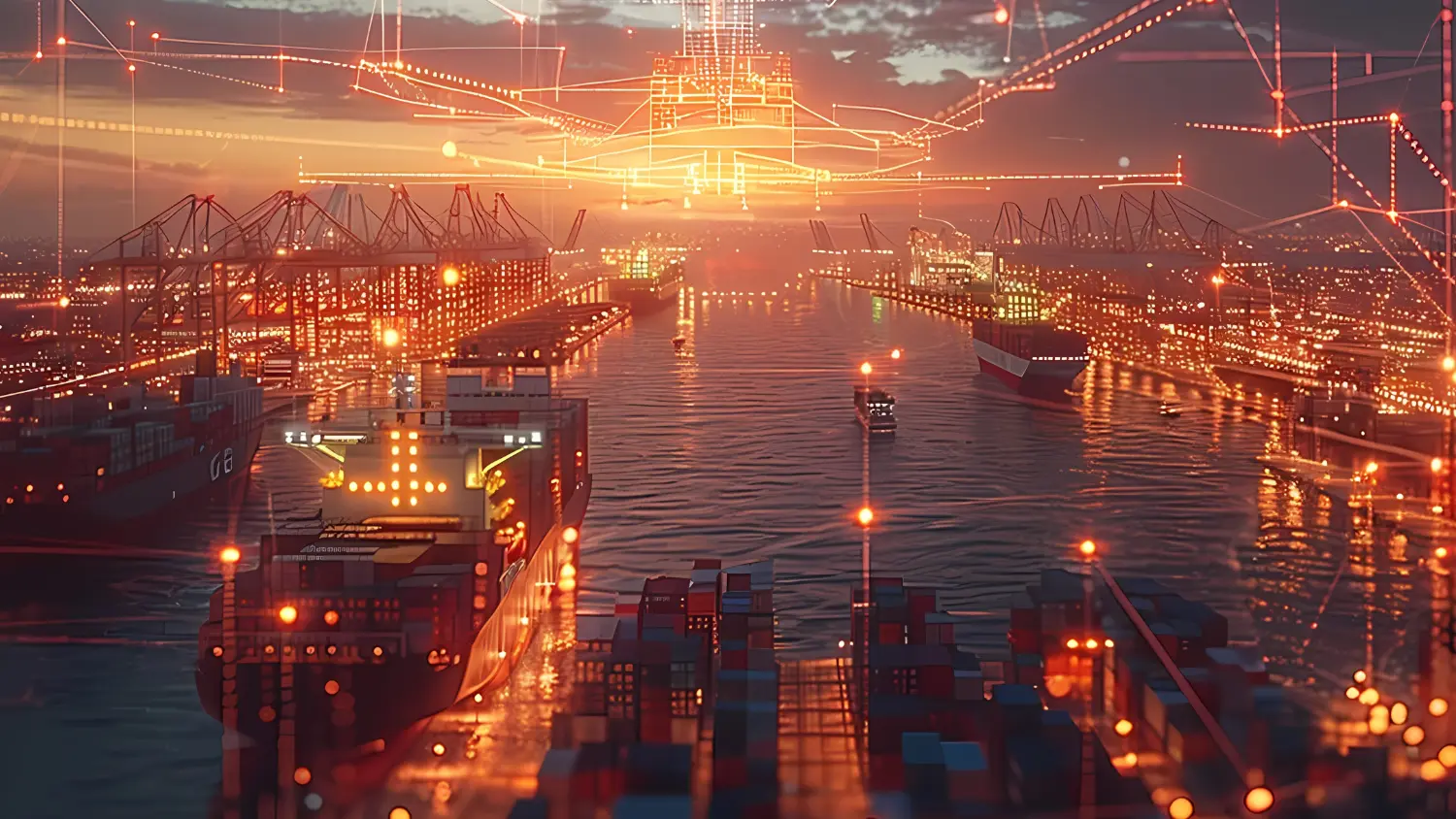
In global logistics, speed and visibility are no longer “nice to have.” They are survival requirements. Disruptions, tighter regulations, and higher customer expectations are forcing companies to modernize how they plan, move, and monitor freight. That is why Supply Chain Technology Adoption is accelerating across every sector, from food and retail to manufacturing and pharmaceuticals.
However, adopting new systems is not only about buying software. It is about improving execution across the full journey. You need better forecasting, stronger inventory control, real-time tracking, and faster decision-making. At the same time, you must protect service levels and cost targets. This is exactly where Supply Chain Technology Adoption becomes a competitive advantage instead of a simple upgrade.
In this article, we break down what is changing in supply chain technology and why it matters. More importantly, we explain how shippers can use these tools to reduce risk and improve performance. If you are planning your next upgrade, this guide will help you move forward with confidence through smarter Supply Chain Technology Adoption.
Why Supply Chains Can’t “Set and Forget” Technology
Many supply chains already rely on large technology stacks. Yet tools lose value when they are not reviewed, updated, or integrated correctly. As a result, companies that “set and forget” their systems often face hidden inefficiencies. They may struggle with inaccurate inventory data, poor forecasting, and slow exception handling. That is why Supply Chain Technology Adoption must be treated as an ongoing process, not a one-time project.
That is why leaders now treat technology as a living operating model. They continuously evaluate what works, what creates friction, and what needs improvement. For example, some teams upgrade their ERP platforms to standardize data. Others test AI forecasting to reduce stockouts. Meanwhile, many operations use machine learning to optimize replenishment and warehouse flows. With the right roadmap, Supply Chain Technology Adoption becomes easier to scale across teams.
The mission is the same across industries. Companies want stronger end-to-end performance, fewer surprises, and faster response times. When the right tools support the right processes, supply chains become more resilient and profitable. In other words, Supply Chain Technology Adoption is now directly tied to operational stability and customer trust.
Digital Twins and AI: How PepsiCo Tests Change Before It Happens
Large networks face a common challenge. Making changes in plants and warehouses is expensive and risky. Therefore, Supply Chain Technology Adoption is accelerating as companies use digital twins and AI to simulate decisions before acting. PepsiCo is a strong example of this shift. The company has piloted physics-accurate 3D digital replicas of selected U.S. plants and warehouse facilities.
These digital models allow teams to test new layouts, validate capacity upgrades, and improve throughput without disrupting live operations. In addition, AI agents can detect design issues early, which helps prevent costly mistakes. This approach supports better planning because Supply Chain Technology Adoption gives teams the ability to compare scenarios and select the best option.
For shippers, the lesson is clear. Modern supply chains are moving from reactive decision-making to predictive design. When you can test changes virtually, you reduce downtime and improve performance. Over time, Supply Chain Technology Adoption creates faster output, more reliable delivery, and stronger service consistency.
IoT Sensors and Real-Time Tracking: Walmart’s Inventory Advantage
Inventory accuracy is one of the most expensive problems in logistics. If you do not know what you have, you cannot ship efficiently. That is why Walmart has expanded the use of IoT sensors to improve tracking across its network. Through its collaboration with Wiliot, Walmart uses ambient IoT “Pixels” to monitor pallets moving from distribution centers to stores.
This technology provides real-time insights into stock levels and locations. It also reduces manual scanning and paper-based processes. Even more importantly, the sensors support cold chain compliance. For example, produce can be flagged if it is not moved quickly to a cooler after arriving at a store.
The data also feeds Walmart’s AI systems, improving forecasting and replenishment decisions. For B2B shippers, this shows how visibility creates measurable results. When tracking becomes automatic, teams make faster decisions, reduce shrink, and improve customer satisfaction.
Automation and Reshoring: GE Appliances Builds a “Zero Distance” Model
Supply chains are being redesigned for speed and resilience. Many manufacturers are reshoring or nearshoring to reduce risk and shorten lead times. GE Appliances has leaned into this strategy by expanding U.S.-based manufacturing and investing heavily in automation.
The company uses robots for tasks such as welding, gluing, and assembly support. It also automates steel shaping for appliance components. As a result, production time and labor dependency can be reduced. At the same time, GE Appliances built a “digital thread” across manufacturing systems. This provides real-time visibility into equipment performance, inventory issues, and component shortages.
In addition, the company is improving internal material movement through autonomous vehicles and automated logistics processes. For shippers, this trend matters because manufacturing footprints are changing. Faster production and shorter lead times will shift freight flows. Therefore, logistics partners must adapt routing, capacity planning, and delivery models.
Machine Learning Forecasting: Scotts Miracle-Gro Fixes Inventory Overload
Holding too much inventory ties up cash. Holding too little causes missed sales and service failures. Scotts Miracle-Gro faced a serious inventory glut after pandemic-era demand spikes. To solve the problem, the company applied machine learning and predictive modeling to improve demand planning.
Previously, planning relied on national averages. However, regional demand patterns are different. So the company moved toward store-level and SKU-level data. This made forecasting more accurate and inventory placement more strategic. Over time, Scotts Miracle-Gro reduced inventory value significantly and shrank its distribution footprint.
The key takeaway is that better planning requires better data. Machine learning works best when it is fed clean, verified information. Therefore, many companies are consolidating data sources into one pool before building AI-driven models. When forecasting improves, supply chains reduce waste, increase agility, and protect margins.
ERP Upgrades and AI Assistants: Nestlé Modernizes for Scale
Many supply chains are limited by legacy systems. Old ERP platforms often slow down reporting, planning, and procurement workflows. That is why Nestlé has upgraded its ERP stack using cloud-based SAP S/4HANA across more than 100 countries.
This upgrade supports consistency in planning and reporting. It also enables more automation in procurement and order fulfillment. Most importantly, the system is designed to embed AI-powered assistants into business operations. That can improve decision-making by matching supply and demand in real time.
For global shippers, ERP modernization is not just an IT project. It is a competitive move. When your systems are unified, you can respond faster to disruptions. You can also scale new products and new lanes with less friction. In the long run, modern ERP platforms create the foundation for stronger forecasting, better compliance, and smarter execution.
Advantages and Benefits of Supply Chain Technology Adoption
The biggest benefit of modern tools is control. With better visibility, companies reduce blind spots and respond faster. As a result, they can protect service levels even when conditions change. Technology also reduces manual tasks, which improves productivity and lowers error rates.
In addition, connected systems help improve compliance. This is critical for cold chain shipments, high-value cargo, and regulated industries. When data is tracked automatically, audits become easier and risks become more manageable.
Most importantly, technology supports better customer experience. Predictive ETAs, real-time updates, and faster exception handling build trust. For B2B shippers, trust drives retention and long-term contracts. When Supply Chain Technology Adoption is done correctly, it improves cost performance while strengthening reliability.
Conclusion
The logistics industry is entering a new era of speed, visibility, and data-driven execution. Companies are investing in digital twins, IoT sensors, automation, AI forecasting, and modern ERP platforms to stay competitive. This shift is not about chasing trends. It is about building supply chains that can perform under pressure.
For B2B shippers, Supply Chain Technology Adoption should be tied to clear business goals. Focus on visibility, planning accuracy, compliance, and service performance. Then choose tools that support real operational outcomes, not just dashboards.
If you want to modernize your freight operations and improve end-to-end reliability, Dark Blue Shipping is ready to help. Contact our logistics specialists today to plan smarter routes, reduce risk, and build a stronger supply chain for 2026 and beyond.